
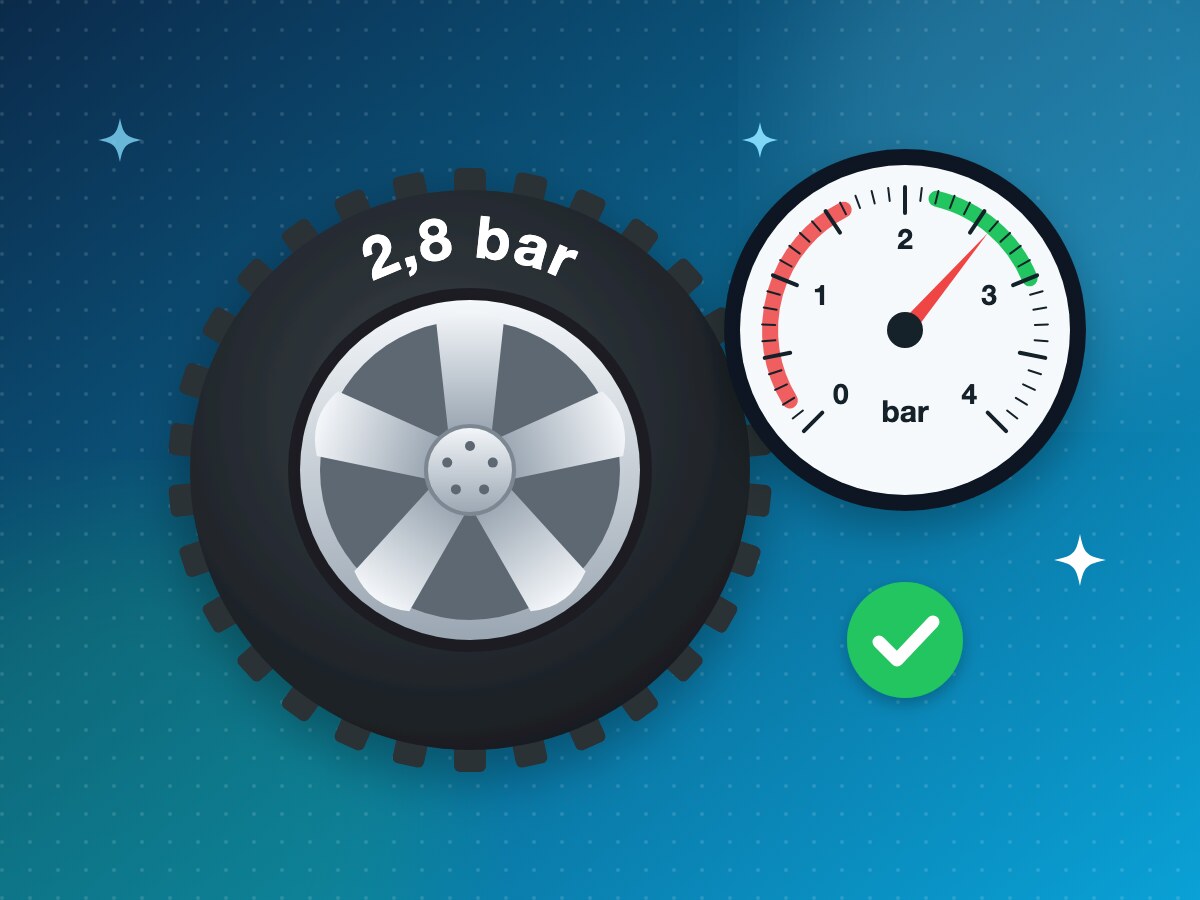
Tyre pressure is one of those things that are easy to forget – until the warning light comes on. Yet it is quick to check and has a big impact on safety, fuel consumption and the life of your tyres.
Why the right pressure matters
- Safety: with too little air, handling becomes vague – especially when braking and cornering.
- Consumption: pressure that is too low increases rolling resistance, so the car uses more fuel.
- Wear: under-inflated tyres run hotter and wear faster on the shoulders.
Where is the right value?
You will usually find the manufacturer’s recommended tyre pressure on a sticker inside the fuel flap or in the door frame on the driver’s side – and of course in the owner’s manual. There are often two values: one for normal load and a higher one for full load. Front and rear values may differ.
bar or psi? A small conversion table
In Europe the pressure is usually given in bar, but some air gauges show psi. 1 bar is about 14.5 psi.
| bar | psi (rounded) |
|---|---|
| 2.0 | 29 |
| 2.2 | 32 |
| 2.5 | 36 |
| 2.8 | 41 |
| 3.0 | 44 |
| 3.5 | 51 |
How to check correctly
- Measure with cold tyres – before driving or after a few kilometres at most.
- Unscrew the valve cap, attach the gauge and read the value.
- Inflate to the recommended value or let some air out.
- Screw the valve cap back on – it protects the valve from dirt.
Always keep the value in view
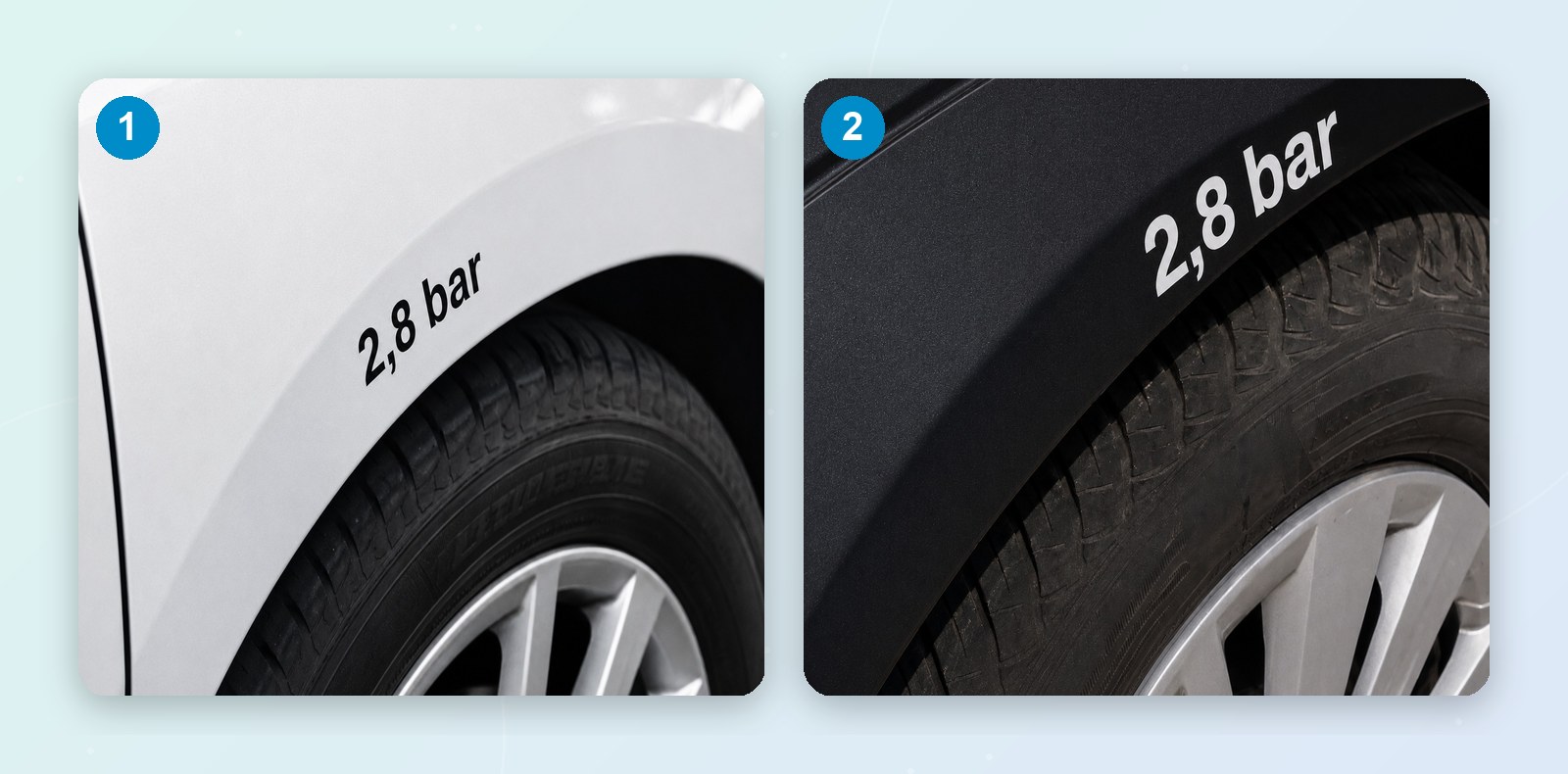
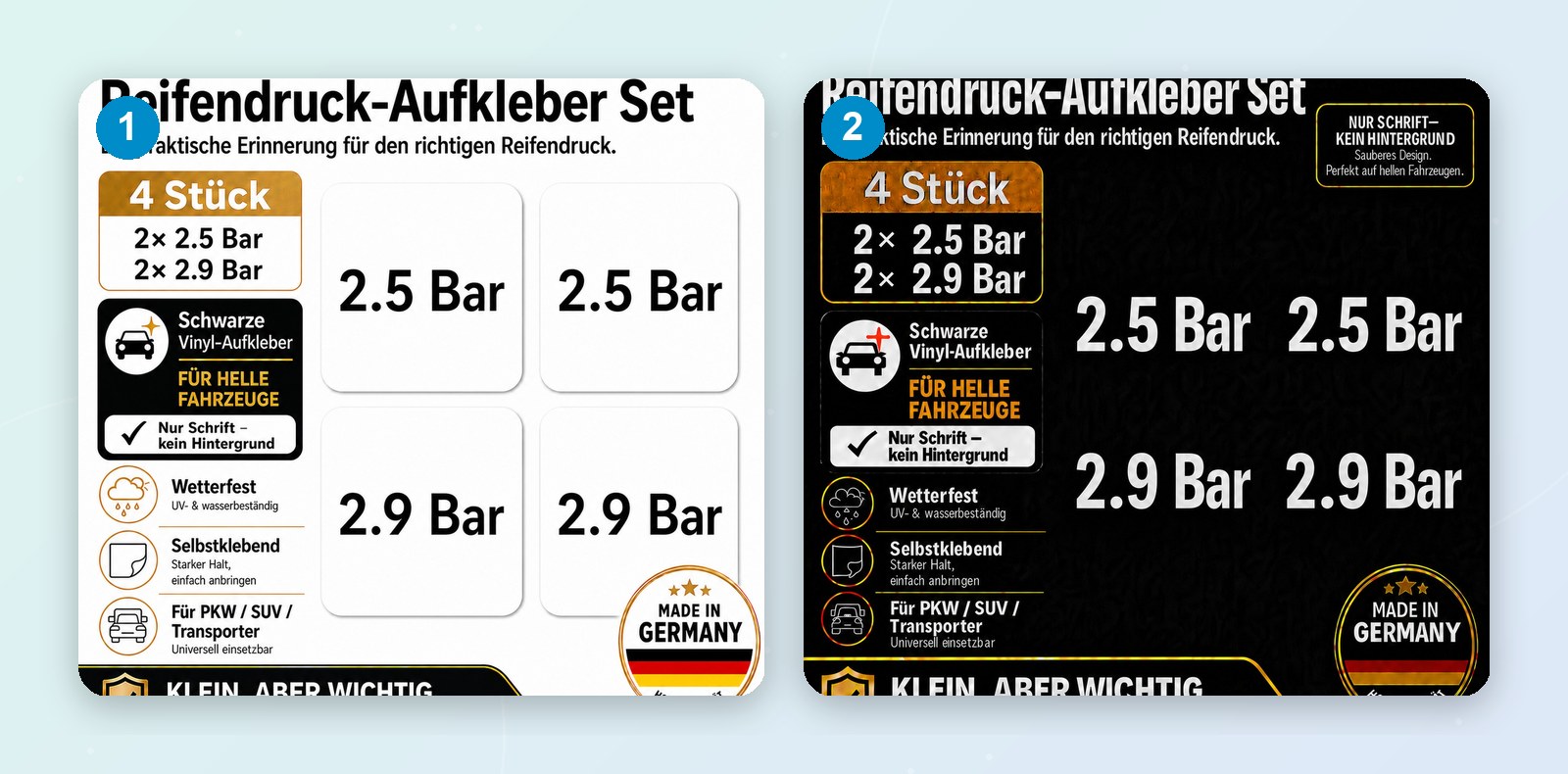
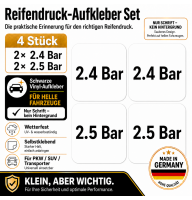
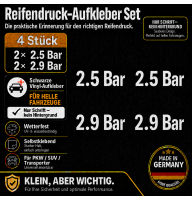
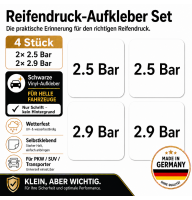
So you don’t have to search at the petrol station, there is our tyre pressure sticker set: four stickers with your values – two for the front, two for the rear. They measure about 7 × 3 cm, are cut without background and fit inside the fuel flap, on the door frame or on the wheel arch. Black for light cars, white for dark ones – in 32 combinations from 2.0 to 5.5 bar.
Write a comment